The Philippines: Holding IFC accountable for its climate commitments

Rizal Commercial Banking Corporation and the Philippines coal boom

Overview

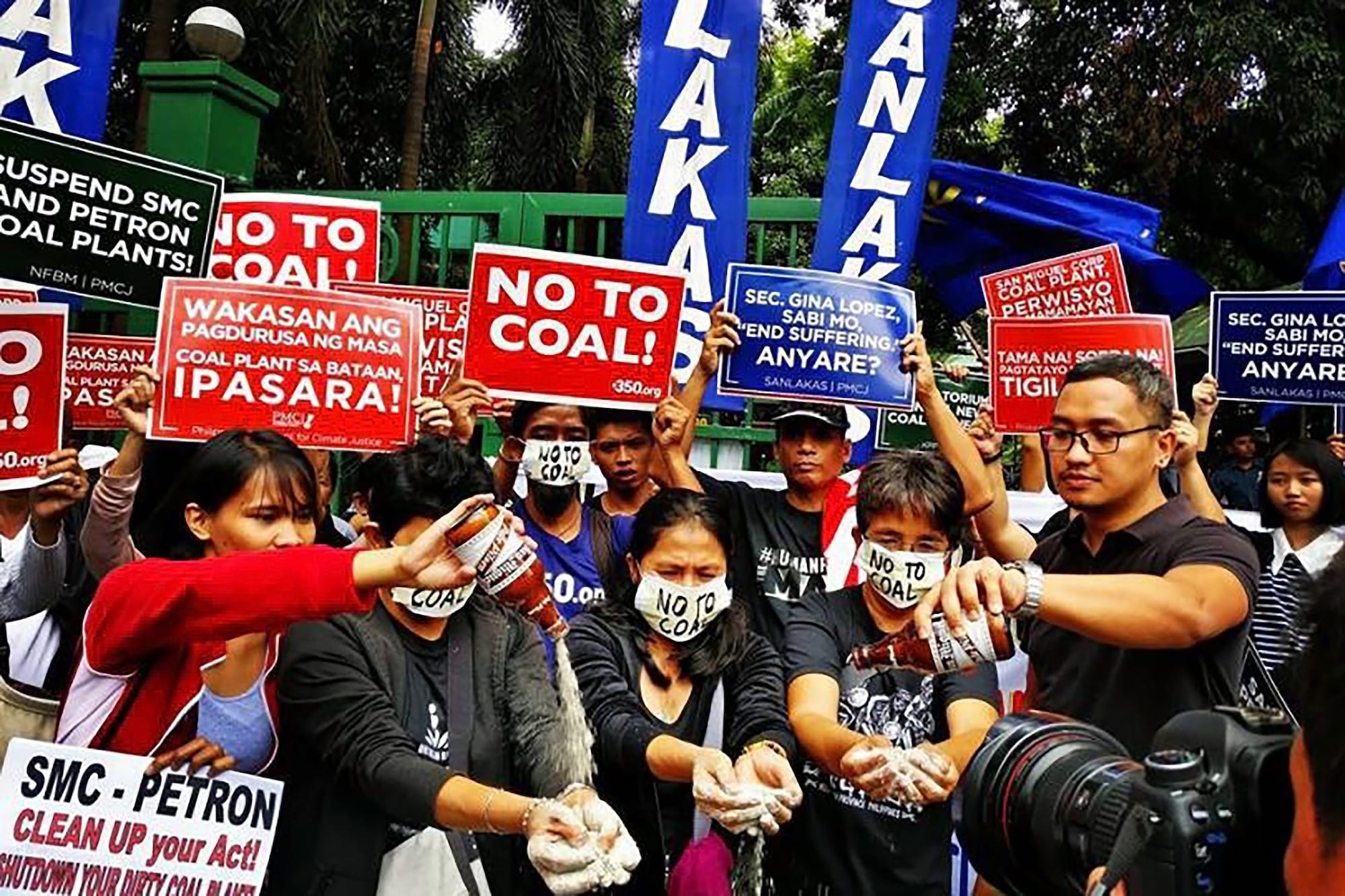
The Philippines is one of the world’s most vulnerable nations to the effects of climate change, yet in recent years it dramatically expanded its coal-fired power industry, intensifying the threat. We were surprised when our research revealed that the World Bank Group’s International Finance Corporation (IFC) surreptitiously bankrolled the coal boom on the island nation through its investments in third-party financial institutions, despite having pledged to stop funding coal.Since 2017, we’ve been supporting the climate justice movement and affected communities in the Philippines to hold the IFC and other lenders accountable and to demand redress.


CASE FILE

Location:Philippines
Project:Multiple IFC debt and equity investments in Rizal Commercial Banking Corporation (RCBC)
Companies:SMC Global Power Holdings Corp., San Miguel Corporation (SMC), Global Luzon Energy Development Corp, Global Business Power Corp., Masinloc Power Partners, Redondo Peninsula Energy, Inc., GNPower Dinginin Ltd. Co., Mariveles Power Generation Corp., South Luzon Thermal Energy Corp, JG Summit Holdings, San Buenaventura Power Ltd. Co., Team Energy Philippines, Aboitiz Power Corp, Therma Power, Inc., Manila Electric, Toledo Power Co., Global Business Power, GNPower Kauswagan Ltd., Ayala Corp, Philippine Investment Alliance for Infrastructure Fund (PINAI), Power Partners Ltd Co., Therma South Inc.


Key concerns:


·      Catastrophic climate change

·      Displacement of Indigenous Peoples without free, prior and informed consent

·      Economic displacement of local communities

·      Severe impacts on human health

·      Air and water pollution from coal ash

·      Failure to inform and consult local communities

·      Threats and murders of environmental activists

Community goals:·      Expose and pressure energy financiers in the Philippines to stop supporting the expansion of coal power and instead provide financing to renewable energy initiatives, in order to achieve the country’s Paris climate commitments.

·      Stop the World Bank Group from secretly bankrolling harmful coal projects through opaque third-party investments.

·      Obtain reparations for communities adversely affected by coal plants that are already operational, which have received funding from IFC intermediaries.


Key investors and financiers:International Finance Corporation, Standard Chartered Bank, and Rizal Commercial Banking Corporation.
Our partners:Philippine Movement for Climate Justice, Recourse, BankTrack

As part of its promise to help tackle climate change, the World Bank Group pledged in 2013 to stop financing coal, except in “rare circumstances.” After decades of funding coal, the environmental consequences of continuing to do socalamitous global climate change, rapid deforestation, and air and water pollutionwere just too severe. 

Former World Bank President Jim Kim articulated the bank’s concerns in May 2017 when he said that building more coal plants, ”would spell disaster for us and the planet.” 

However, despite these strong words, our research found that the bank has continued to be a major funder of the coal industry through multilayered financial transactions that exist beyond the scrutiny of the public. 

A prime example is the $228 million dollars that the International Finance Corporation (IFC), the World Bank’s private lending arm, provided to the Philippines’ Rizal Commercial Banking Corporation (RCBC), which went on to provide and arrange billions of dollars in financing for companies developing new coal power plants across the island nation. 

Coal-fired power threatens the very existence of the Philippines. As the world’s third-most vulnerable nation to climate change, it has seen increasingly devastating storms and rising sea levels in recent years. As many as 2,410 Filipinos die prematurely annually due to emissions from coal plants, which pollute the air, sea, fisheries and coral reefs, leading to environmental damage and loss of livelihoods. 

That’s why Inclusive Development International is supporting the Philippine Movement for Climate Justice in its efforts to halt the rapid expansion of the country’s coal-fired power industry. 

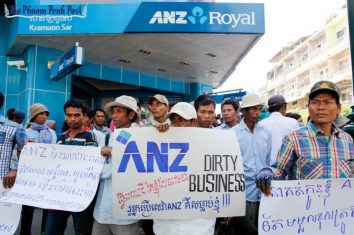
We assisted more than 100 citizen groups and 19 affected communities to file a historic complaint against IFC for fueling global warming, environmental contamination and other adverse impacts on communities’ health and livelihoods through its indirect investments in the Philippines coal industry. This was the first climate change-related complaint to be investigated by IFC’s independent watchdog, the Compliance Advisor Ombudsman (CAO), and serves as an example of how communities around the world can strategically utilize accountability mechanisms like the Compliance Advisor Ombudsman to advance the movement for climate justice. 

The resulting CAO investigation found that the IFC’s investments in RCBC had indeed violated its environmental and social Sustainability Policy. It recommended that the IFC take steps to ensure that instances of harm raised by affected communities were assessed and remediated in line with the IFC Performance Standards, and that IFC contribute to remedial solutions as appropriate. The CAO also recommended that the IFC evaluate and mitigate the climate impacts of the coal plants and institute systemic reforms to ensure it does not contribute to similar harms in the future.  

In April 2022, the IFC board approved an action plan meant to address these recommendations. The IFC has spent three years and millions of dollars assessing the harms, but a CAO monitoring report published in January 2025 suggests it does not have a plan to address them. At the end of 2025, the IFC divested its equity stake in RCBC, making an estimated $46 million return on its investment.  We continue to support the complainants in demanding that the IFC live up to its commitment to remediate the harms that it contributed to as a result of its failed due diligence on its investments in RCBC.  

Several important policy outcomes resulted from this case. In 2020, RCBC bank announced that it would no longer finance coal projects. Also, in response to the complaint, the IFC unveiled its (“Green Equity Approach”). The Green Equity Approach, which requires the financial institutions that it holds equity in to start phasing out coal sector financing immediately and bring their coal exposure to zero by 2030, while simultaneously ramping up their investments in renewable energy. This is a huge and encouraging step in the right direction, but the IFC must expand this policy to cover all fossil fuels that cause global warming. 

Subscribe to our mailing list to stay up to date with this and other cases. 

Our Actions

In October 2017, we helped the Philippine Movement for Climate Justice and 19 affected communities file a historic climate change complaint against the International Finance Corporation with its Compliance Advisor Ombudsman (CAO).

The complaint accused IFC of supporting 19 new or expanded coal-fired power plants in the Philippines through its investments in Rizal Commercial Banking Corporation. After receiving $228 million in IFC funding and the World Bank’s stamp of approval, Rizal went on to provide or arrange billions of dollars in financing for the power plants and the companies developing them, in violation of the IFC’s social and environmental Performance Standards and climate commitments. 

The complaint argued that Rizal bank’s extensive financing of the coal sector should have warranted a cumulative impact assessment of its contribution to climate change.  With its large stake in the Philippine bank and seat on its board of directors, IFC should have been cognizant of the bank’s deep exposure to the coal sector and insisted on a cumulative impact assessment, including the identification and assessment of alternatives. It argued that IFC should have used its considerable leverage to reduce Rizal’s coal exposure and instead increase its support to renewable and low carbon energy generation projects. 

The complainants called on IFC to use its leverage to stop the coal projects that have not yet commenced operation, and to ensure that its financial intermediaries in the Philippines and around the world stop financing coal projects and instead fund renewable energy solutions. 

The CAO found the complaint eligible (in relation to 11 of the 19 plants it addressed) and, after determining that the complainants and the plants’ developers could not come to an agreement to enter into a dispute resolution process, transferred the case to CAO’s compliance function, which determined that the “substantial concerns” raised warranted a full investigation. 

The compliance investigation report found that IFC had failed to ensure that RCBC applied its environmental and social Performance Standards to the financing of the plants. The CAO concluded that this failure very likely caused grave harm to surrounding communities, including serious impacts on livelihoods, health and well-being due to air and water pollution and physical and economic displacement, among other harms. In its report, the CAO also notes that, once operational, the plants will produce approximately 40 million tons of CO2 annually – equivalent to roughly 30 percent of the Philippines’ annual emissions in 2019. 

This was the first investigation undertaken by the CAO to specifically examine IFC’s contribution to climate change and to determine that its failure to stop an equity client from financing new coal-fired power plants violated its environmental and social policies and climate commitments. 

The CAO recommended that IFC take steps to ensure instances of harm raised by affected communities are assessed and remediated, consistent with the requirements of the IFC Performance Standards, and that IFC contribute to remedial solutions as appropriate. The CAO also recommended that IFC evaluate and mitigate the climate impacts of the coal plants and institute systemic reforms to ensure it does not contribute to similar harms in the future. 

In April 2022, IFC’s board of directors approved a Management Action Plan that goes part way toward addressing the CAO’s recommendations. In response to requests from the Complainants and the U.S. representative to IFC’s board, who were concerned that the plan overly relied on the cooperation of the coal companies to provide redress, IFC agreed to return to the board within 9 months to provide a progress update and make adjustments to the plan if needed. 

In its statement responding to IFC’s Management Action Plan, the U.S. also articulated several key positions with respect to IFC’s broader approach to remedy. These included underscoring the need for the approach to recognize that the costs of poor implementation by IFC or its clients should not fall on the affected people, and the need for IFC to increase its leverage, including through contractual provisions to enable remedy and in relation to its financial intermediary investments, which make up half of its portfolio. The U.S. also expressed an expectation that IFC implement a process to guide its financial intermediary clients toward adopting commitments to align their operations with the goals of the Paris Agreement. The statement was endorsed by 11 other constituencies of the World Bank Group. 

IFC’s Management Action Plan committed to “assess” and “mitigate” the non-compliance-related impacts of the 10 coal subprojects (one of the projects did not move forward).  IFC retained a third-party firm, Environmental Resources Management (ERM), to undertake these studies and make recommendations to bring these projects into compliance with the Performance Standards.  Inclusive Development International and our partners engaged deeply with ERM in this process, including facilitating access to the affected communities and reviewing and commenting on drafts of the reports.   

But to our shock and dismay, IFC refused to disclose the final assessment reports, citing client confidentiality agreements and unspecified data privacy laws.  And in January 2025, IFC published a progress report indicating that RCBC disagreed with the findings and recommendations of the gap analysis reports, and as a result it had no plans to take further action to address them.  The CAO also published its own monitoring report on the implementation of IFC’s Management Action Plan, noting that “IFC has made significant efforts to assess the E&S [environmental & social] risks and impacts of the 10 power plants. However, the risks and impacts to communities and the environment identified have not been mitigated, despite IFC’s E&S consultant making 186 recommendations to improve power plant E&S performance and/or address underlying complaint issues.”  


Inclusive Development International submitted a request for disclosure of the final gap analysis reports under IFC’s Access to Information policy, along with a series of appeals after the initial requests were denied.  This is included a final appeal to the Access to Information Appeals Panel (AIP Panel).  On March 16, 2026, the Appeal Panel upheld IFC’s denial of the disclosure request, again citing confidentiality agreements between IFC, RCBC and ERM, which trumped IFC’s Access to Information Policy.   

In a further development, IFC divested its equity stake in RCBC at the end of 2025. Our research found that IFC earned over $46 million in dividends and capital gains on this investment, which has left coal impacted communities impoverished.  

Despite these setbacks, Inclusive Development International has continued to demand, alongside the Philippine Movement for Climate Justice and Recourse, that IFC contribute to the remediation of the harms that resulted from the due diligence failures surrounding its investments in RCBC.  We are calling on the IFC to join forces with the International Bank for Reconstruction and Development, the public sector arm of the World Bank Group, and work directly with the coal plant owners and the Philippines government to support the farming, fishing and Indigenous communities affected by these coal plants through targeted pollution prevention, public health and livelihood restoration initiatives.  

Additionally, while the IFC was conducting their assessment of harms, Inclusive Development International, PMCJ, Recourse, and BankTrack filed a complaint to the UK National Contact Point (NCP) for Responsible Business Conduct against Standard Chartered Bank, which provided financing for four of the coal plants, alleging that the Bank failed to meet its responsibilities under the OECD Guidelines for Multinational Enterprises by co-financing the power plants. The NCP complaint, building off the investigation behind the 2017 CAO complaint, asserted that Standard Chartered failed to conduct effective due diligence and contributed to human rights violations and a range of adverse environmental and social impacts, and it argued that the bank now has a responsibility to help remediate the harms that the communities suffered,  by 1) using its leverage with the coal companies it financed—and in some cases continues to finance—to implement the remedial recommendations that arose from CAO investigation process and 2) contributing directly to remedial actions and mitigation measures where it can.  

In September 2025, the complaint was accepted, meaning that the UK NCP acknowledged that the allegations merited further examination and that it will offer voluntary mediation to both parties. If either party declines, it will then conduct a further examination of the complaint to determine whether the company acted consistently with the OECD Guidelines.


Background

According to scientists, limiting the increase in the global average temperature to 1.5 degrees Celsius above pre-industrial levels is the lowest limit still physically possible to achieve. Holding the increase to such a limit would significantly reduce the risks and impacts of climate change. But the window of time is rapidly closing. In a few years, unless drastic changes in energy consumption and development are undertaken, 1.5 degrees will no longer be possible and the world will face catastrophic climate change.

The Philippines is the one of the world’s most vulnerable countries to climate change, according to the Global Climate Risk Index. The island nation is located in an area of the Pacific Ocean that has especially warm water, which is further heating up as global temperatures rise. This warming has increased the intensity of typhoons, according to scientists. Four of the worst storms in Philippines history have occurred in the last decade, including Typhoon Haiyan, which killed at least 6,300 people in 2013. Sea levels in the country are expected to rise three times faster than in the rest of the world. The impact of these storms reverberates long after the initial deaths and property damage are tallied. In 2016 alone, natural disasters displaced an estimated 6 million Filipinos. As storms become fiercer, the number of people vulnerable to physical and economic displacement will increase commensurately and the country’s poor will be disproportionately affected, in many cases falling deeper into poverty. 

Central to addressing the threats and impacts brought about by the climate crisis is energy system transformation.  Carbon-polluting fuels like coal must be phased out and replaced with clean and safe renewable energy. However, the Philippine Government continues to pursue a massive expansion of coal power to address the nation’s energy needs, an incongruous policy for a country that is among the most vulnerable to climate change impacts. 

Activists who speak out against harmful development projects face grave danger. In 2016, 28 environmental and land defenders were murdered in the Philippines, making the country one of the most dangerous in the world for such work. Anti-coal campaigner Gloria Capitan was murdered in July 2016 for opposing the expansion of coal, including several projects that received indirect IFC backing. 

In October 2016, Inclusive Development International exposed the IFC’s hidden support for these new coal projects in the Philippines in “Disaster for Us and the Planet” – Part 1 of our four-part investigative report, Outsourcing Development: Lifting the Veil on World Bank Group’s Lending Through Financial Intermediaries. The report exposes how the World Bank Group is undermining its international climate commitments by quietly funding a coal boom in Asia through multilayered financial transactions that are mostly concealed from public examination. 

The investigation revealed 41 new coal projects supported by the IFC through its highly opaque investments in commercial banks, private equity funds and other financial intermediaries since 2013, when the bank committed to stop funding coal. Nineteen of those projects weare in the Philippines. The investigation laid the basis for the Philippine Movement for Climate Justice complaint. 

In response to the Philippines complaint and the intensifying public scrutiny of the World Bank Group’s indirect investments in fossil fuels, the IFC adopted a new Green Equity Approach. The new approach to financial intermediary lending aims to support the banking sector to mobilize the $23 trillion in debt financing that the IFC estimates is necessary to finance the transition to clean energy, while requiring the 20% of financial institutions in which it holds equity, such as Rizal bank in the Philippines, to phase out all of their exposure to coal-related activities by 2030.  It requires its equity clients to report annually to the IFC on its aggregate coal exposure, which will be publicly disclosed by the IFC.

Further Reading

News & Updates

Related Reading

Other Cases

Sign Up!

Hey, you seem interested in our work.  Why not sign up to our mailing list for occasional updates, alerts and actions?