In 2008 and 2009, amid a spate of land grabbing in Cambodia, more than 600 families in Oddar Meanchey Province were forcibly evicted to make way for an industrial sugar plantation. But after Inclusive Development International’s follow-the-money research revealed that Mitr Phol Sugar Corporation Limited—supplier to global brands including Coca-Cola and Nestlé—was behind the land grabs, affected communities were able to leverage a multipronged advocacy strategy, including engagement with the company’s buyers, a series of complaints to international human rights and corporate accountability mechanisms, and a groundbreaking transboundary class action lawsuit, to bring Mitr Phol to the negotiating table. Following legal proceedings in Thailand and a court mediation process, the Parties came to an agreement in June 2025.
| Case File | |
| Location: | Oddar Meanchey province |
| Project: | Sugarcane plantation |
| Companies: | Mitr Phol Sugar Corporation Limited and Bonsucro |
| Key concerns: | · Land grabbing and forced evictions · Destruction of homes, crops and property · Homelessness and impoverishment · Corporate impunity and failure to provide redress · Multi-Stakeholder Initiative greenwashing |
| Community goals: | Return of land and compensation for losses |
| Key investors and buyers: | Mitr Phol Sugar Corporation Limited is a privately owned group of companies, mainly owned by the Vongkusolkit family. Its current and former sugar buyers include Nestlé, Mars-Wrigley, Coca-Cola, PepsiCo, Corbion and Total. |
| Our partners: | Equitable Cambodia, the Cambodian League for the Promotion and Defense of Human Rights (LICADHO), Community Resource Center, Legal Rights and Environmental Protection Association |
| Outcomes: | Plaintiffs representing hundreds of Cambodian families reached a resolution with Mitr Phol in June 2025. (You can read the Parties’ agreed public statement here.) |
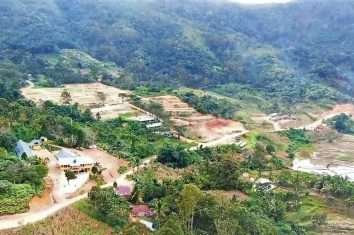
After Mitr Phol Sugar Corporation Limited—supplier to global brands such as Nestlé, Mars and Coca-Cola—secured a legally dubious large-scale land concession from the Cambodian government in 2008, the communities and smallholder farmers living on and working the land were forced out to make way for an industrial sugarcane plantation.
More than 2,000 families in 26 villages were displaced. Affected households lost extensive rice fields, orchards, grazing land, crops and access to forests that sustained their livelihoods. In some instances, police and private security forces violently evicted residents, bulldozed houses, torched rice fields, and beat and arrested villagers. Families were left homeless and landless, with many forced to migrate to Thailand to find work.
One brave community leader, Hoy Mai, traveled 300 miles while pregnant to the capital Phnom Penh to petition the Prime Minister for help. Instead, she was arrested and gave birth in prison. For more than ten years, she fought for justice, including as the lead plaintiff representing more than 700 affected families in a groundbreaking class action suit against Mitr Phol filed in Thailand in 2018. The class action Hoy Mai & Others vs. Mitr Phol Sugar Corporation Limited was the first transboundary human rights litigation of its kind in Southeast Asia.
Inclusive Development International worked with Cambodian partners and a team of Thai lawyers to file the lawsuit, after exhausting many other avenues for advocacy. Before reaching a resolution, we overcame numerous procedural barriers—challenging Mitr Phol’s attempts to get the case dismissed and securing reams of evidence from the company’s buyers in the United States to ensure the case could move forward.
A multipronged advocacy approach, which included engagement with Mitr Phol’s customers and complaints to a series of non-judicial grievance mechanisms and human rights bodies, in addition to the lawsuit, ultimately brought Mitr Phol executives to the negotiating table. In 2025, after a court-ordered mediation process, the parties reached an agreement that was acceptable to the communities. You can read their agreed public statement here.
For the next year, Inclusive Development International worked with our partners at Equitable Cambodia and community representatives to ensure a fair and equitable distribution of the settlement funds. In April 2026, in our capacity as trustee of the settlement fund, we transferred the final payments to more than 600 affected families—allowing them to move on and focus on rebuilding their lives, which were upended by violence and displacement so many years ago.
We are thrilled that the Oddar Meanchey communities now have some measure of justice.
Engaging with Multi-Stakeholder Initiative Bonsucro
In 2011, after identifying Mitr Phol as the hidden owner of the Cambodian shell companies behind the land grabs in Oddar Meanchey, Inclusive Development International’s founders worked with representatives of the evicted families to submit a complaint to the grievance mechanism of Bonsucro, an industry dominated “sustainable” sugarcane multi-stakeholder initiative to which Mitr Phol belonged. The complaint was accepted, but rather than addressing the allegations, Mitr Phol withdrew from the initiative. Three years later, however, the company was quietly reinstated as a Bonsucro member even though it had failed to re-engage in the complaint resolution process. This was despite an express written commitment in 2012 by the then-chair of Bonsucro’s Complaints and Grievances Committee that engagement in the resolution process would be a condition of readmission should the company choose to rejoin.
Engaging the Thai National Human Rights Commission
In May 2013, Inclusive Development International’s Cambodian partners filed a complaint with the Thai National Human Rights Commission on behalf of the affected communities alleging that Mitr Phol’s Cambodian subsidiaries were implicated in serious human rights violations in relation to its land concessions in Oddar Meanchey.
In October 2015, the Thai National Human Rights Commission issued its investigation report, finding Mitr Phol directly responsible for the forced evictions and associated human rights violations and in serious breach of its responsibilities under the United Nations Guiding Principles on Business and Human Rights. Importantly, the Commission found that, although Mitr Phol has since ceased its operations in Cambodia and relinquished its economic land concessions there, the company had an ongoing responsibility to provide compensation and other appropriate remedies for the losses and human rights impacts suffered by people in Bos, O’Bat Moan, Taman, Trapaing Veng and Ktum villages as a direct result of its previous business activities.
At a press conference, the Thai human rights commissioner Niran Phitakwatchara said that the land grabs led to the “collapse of the community.” Rarely, if ever, had a national human rights commission issued such a strong condemnation of a private company. Yet, Mitr Phol still refused to provide any form of compensation to the Cambodian families whose lives it destroyed.
Holding Bonsucro Accountable
In 2016, Inclusive Development International, together with local partners Equitable Cambodia and the Cambodian League for the Promotion and Defense of Human Rights (LICADHO), submitted a new complaint to Bonsucro on behalf of 712 families. The complaint requested that Bonsucro appoint a competent and impartial mediator to attempt to bring about a resolution of the case through the provision of adequate compensation to affected households, and if such a resolution could not be reached, to expel Mitr Phol from the organization for breaching its Code of Conduct. Two years later, Bonsucro’s board dismissed the complaint without taking any action, while at the same time accepting Mitr Phol’s paid sponsorship of its Bonsucro Global Week conference in Thailand, which ,showcased Mitr Phol as a “leading member” of the group.
In March 2019, Inclusive Development International, LICADHO and Equitable Cambodia responded to the group’s obstinacy by lodging a precedent-setting complaint against Bonsucro with the UK National Contact Point for Responsible Business Conduct (the UK NCP), arguing that the multi-stakeholder initiative breached its human rights responsibilities under the OECD guidelines and U.N. Guiding Principles on Business and Human Rights. Bonsucro claimed that its mission was “to ensure that responsible sugarcane production creates lasting value for the people, communities, businesses, economies and eco-systems in all cane-growing regions.” Our complaint alleged that rather than hold Mitr Phol to these standards, Bonsucro had whitewashed the company’s human rights abuses , helping to facilitate access to the global sustainable sugar market. For more about our arguments regarding the human rights responsibilities of Bonsucro and other similar industry sustainability bodies, which rose in response to consumer demand for ethical sourcing, read our blog, “Why Multi-Stakeholder Initiatives Need to be Held Accountable for their Rights Abusing Members.”
After a lengthy examination, the UK NCP determined in January 2022 that Bonsucro had breached OECD standards and violated its human rights responsibilities. Specifically, it found that 1) MSIs like Bonsucro are multinational enterprises with human rights responsibilities vis-a-vis their members and 2) Bonsucro “did not undertake an appropriate level of due diligence” when it readmitted Mitr Phol as a member in 2015 and, further, that it failed to use its leverage with Mitr Phol to remediate the harms suffered by Cambodian communities devastated by the company’s land grab.
Bringing a Landmark Human Rights Case against Mitr Phol in Thailand
Frustrated by the failure of Bonsucro’s grievance mechanism and Mitr Phol’s refusal to compensate the families even in the face of clear recommendations to do so by the Thai Human Rights Commission, Inclusive Development International worked with our Cambodian partners and a team of Thai lawyers to bring a landmark class-action lawsuit against the company in the Thai courts. Hoy Mai & Others vs. Mitr Phol Co. Ltd., filed in April 2018 and representing a class of approximately 3,000 people, was the first ever class-action lawsuit filed in the Thai courts by plaintiffs from another country for abuses committed by a Thai company outside of Thailand. More details about the case are available here.
When the court of first instance wrongly denied class action status to the plaintiffs, Inclusive Development International and our partners appealed the decision and won. On July 31, 2020, the Bangkok South Civil Court overturned the lower court’s decision and recognized class status for the complaint, allowing the roughly 700 families to bring the lawsuit as a group. For Thailand and the region, the decision changed the legal landscape, providing that class action legislation could be used in transboundary cases and to protect the victims of transnational corporate abuse in Southeast Asia and beyond. In May 2022, the court denied Mitr Phol’s motion to dismiss the case, allowing it to proceed to trial. In February 2025, the parties came to an agreement, leading to a satisfying resolution for the affected communities.
Engaging with Mitr Phol’s Buyers
In parallel with other advocacy strategies, Inclusive Development International engaged with Mitr Phol’s buyers on a regular basis, urging them to use their leverage to hold the company accountable to its human rights responsibilities.
.
While Coca-Cola took some initial steps to investigate the allegations and engaged with Mitr Phol on the concerns, it never made its findings public and failed to use its leverage effectively to compel the company to provide redress to the victims in Cambodia.
In 2021, Inclusive Development International filed a petition with the U.S. federal court in the Northern District of Georgia, on behalf of plaintiffs in the class action lawsuit underway in Thailand, requesting assistance in obtaining evidence from Coca-Cola from its investigations into Mitr Phol (the U.S. Foreign Legal Assistance Statute permits U.S. courts to assist foreign litigants in obtaining evidence from companies found in the United States). The court ordered Coca-Cola to turn over the information requested, which it determined to be “essential to the full and fair adjudication of the Thai proceedings.”
Inclusive Development International also continued to call on all of Mitr Phol’s industrial buyers to use their leverage to ensure that Mitr Phol repaired the grave harms it caused to hundreds of families in Cambodia. In November 2020, ahead of the Ninth UN Forum on Business and Human Rights, where we delivered this joint statement, we wrote to Mitr Phol’s buyers to urge them to act without further delay.
After our follow-the-money research revealed that Mitr Phol was behind the land grabs, and was a major supplier for Coca-Cola, Nestlé and other global brands, affected communities were able to leverage engagement with those buyers, along with a series of complaints to international human rights and corporate accountability mechanisms, and ultimately the groundbreaking transboundary class action lawsuit, to bring company executives to the negotiating table.
The communities’ victory in this case was possible because several different streams of advocacy, pursued over many years, converged in the context of the court case, convincing the company that their best option was to come to an agreement with the affected families. It is an inspiring example of transnational litigation being used effectively to address corporate human rights abuses for the first time in a Southeast Asian court room. And it is also an important demonstration of how judicial and non-judicial strategies can be used in parallel to complement each other.
In addition to contributing to the eventual settlement agreement, our engagements with Bonsucro and the UK NCP also contributed to important policy and systems changes. The UK NCP’s treatment of our complaint against Bonsucro established that industry certification bodies are multinational enterprises with human rights obligations, to which they can be held to account. In response to the NCP’s recommendations, Bonsucro reformed its Membership Due Diligence policies and Code of Conduct for members, and placed Mitr Phol’s membership “under review.” However, as part of the UK NCP’s follow-up process monitoring the outcomes of the case, the NCP issued a statement reflecting our concerns that this process would only translate into an effective use of leverage if Bonsucro engaged meaningfully with rights-holders and their representatives in the monitoring of members under review and took their views into account when assessing compliance with the Code of Conduct. On the eve of the trial in Thailand, when the court had ordered the parties to attempt mediation, we re-engaged with Bonsucro as part of the UK NCP follow-up process to urge them to finally use their leverage with Mitr Phol. And they did, which contributed to the final settlement. Bonsucro’s ultimate engagement with Mitr Phol demonstrated that when such bodies do use their leverage with members it can have a tangible impact in terms of outcomes for affected communities.
Sweet End for Oddar Meanchey Community to 17-Year Lawsuit with Sugar King — Kiripost — June 28, 2025
Cambodian Villagers Challenge Sugar Giant in Thai Court — justiceinfo.net — October 25, 2022
Cambodians face sugar giant in Thai court — Globe Southeast Asia News — August 3, 2022
Thai court allows Cambodian class action against Thai firm — The Washington Post — July 31, 2020
Cambodian farmers take Thai sugar giant to court — Aljazeera — June 12, 2019
Cambodian farmers battle in landmark lawsuit against Thai sugar firm — Reuters — June 11, 2019
Calling out the BS in BonSucro — Inclusive Development International — March 11, 2019