2025 IMPACT REPORT
AGAINST ALL ODDS
2025 IMPACT REPORT
AGAINST ALL ODDS
Message from the Executive Director
Last year was brutal for the ideals we hold dear. Decades of hard-won human rights and environmental protections were rolled back, corporations gained new license to exploit vulnerable communities and fragile ecosystems, & climate commitments were abandoned.
Sometimes, it is hard to maintain the hope we need to power our work, but tenacity—especially in the face of long odds—has always been a core value at Inclusive Development International. In this moment, human rights leadership and a resilient movement for social and environmental justice is more important than ever. It is not the time to waver, and we won’t.
In 2025, our team helped deliver some of the most meaningful community victories and innovative policy solutions in our organization’s history. This was the year that Hoy Mai and her community finally secured justice after waging a 15-year advocacy campaign and legal battle against one of the world’s largest sugar producers. Success in the Cambodian sugar case is evidence of what our advocacy model can achieve when communities are equipped to follow the money and gain leverage to hold powerful corporations accountable.
Below, you’ll find more examples of how our team worked as hard as ever in 2025 to make this happen for communities around the world.

David Pred, Co-Founder and Executive Director
Feature
A Long Road to Justice
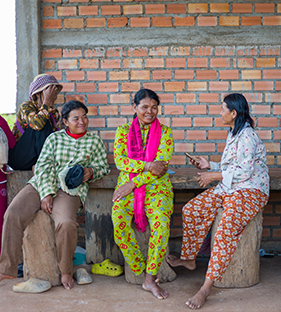
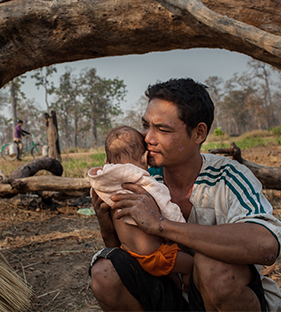
In June 2025, after a 15-year struggle that included a groundbreaking class action lawsuit, communities in Cambodia’s Oddar Meanchey Province reached a financial settlement with the Thai sugar giant Mitr Phol. We are beyond proud of what our team, partners and especially the community representatives and plaintiffs in this case were able to accomplish.
What we do
Increasing the cost of
corporate misconduct
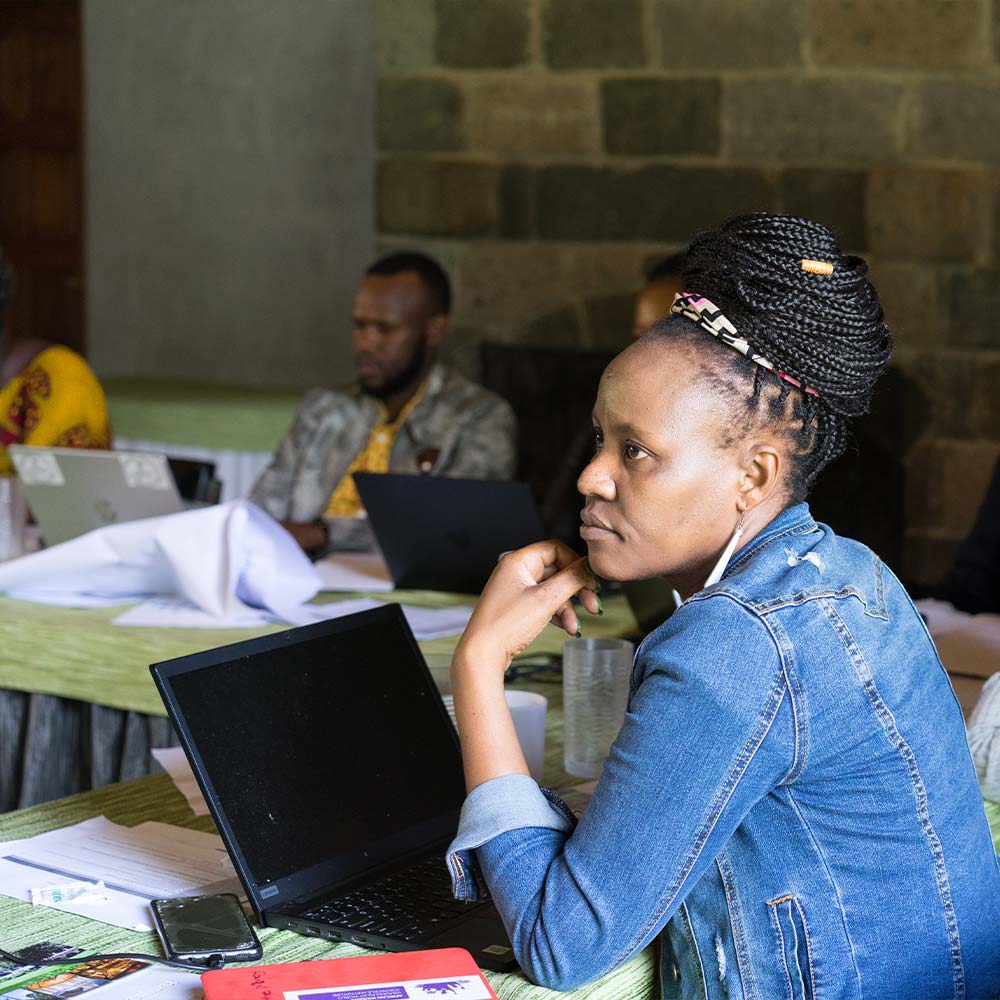

Research
Our approach starts with investigative research to expose the web of actors behind harmful projects—the investors, financiers, and supply chain actors that make these projects possible and profit from them. We conduct this research at the request of community advocates and then work with them to develop strategies using this information to further their advocacy goals.
Read more about our investigations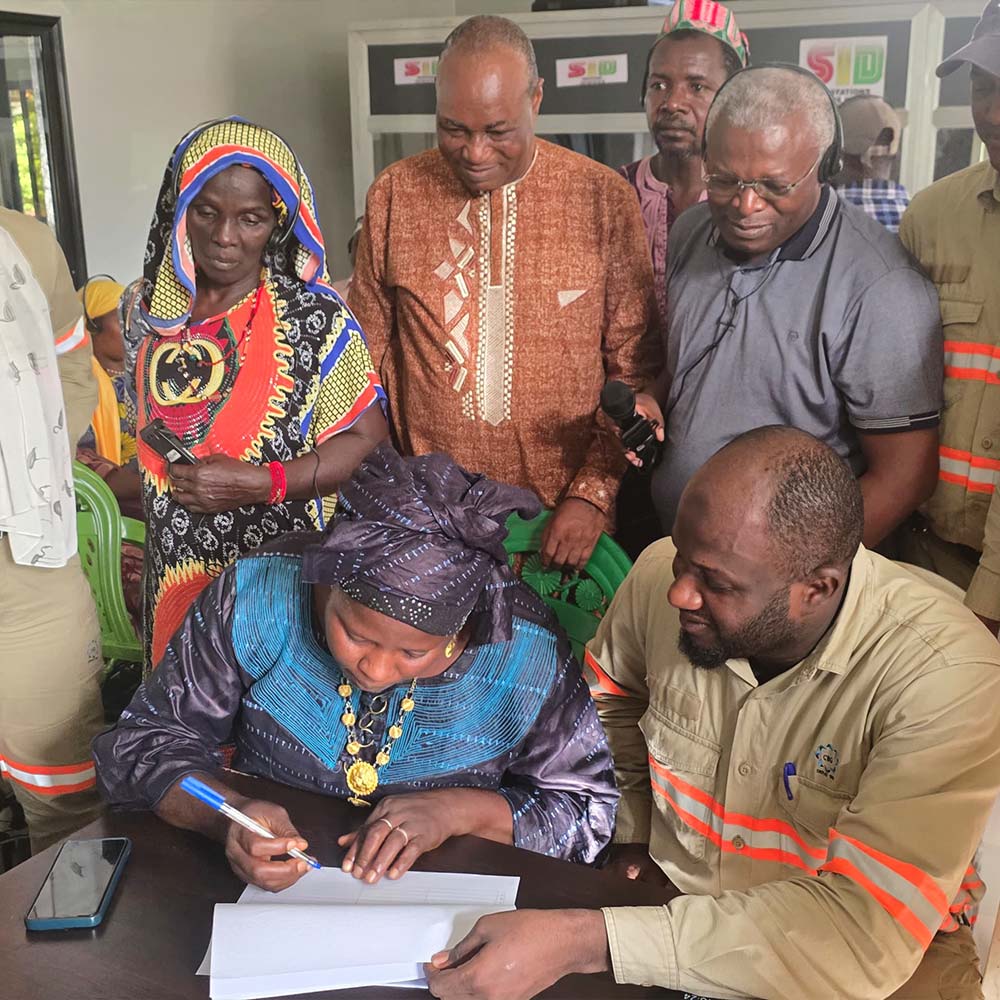

Casework
We work alongside select local and community-based partners over the long term to implement multi-pronged advocacy strategies to prevent harm and secure redress. This can include pursuing legal action, mediation and other avenues of recourse to hold corporate actors and their financial backers accountable.
Read more about our casework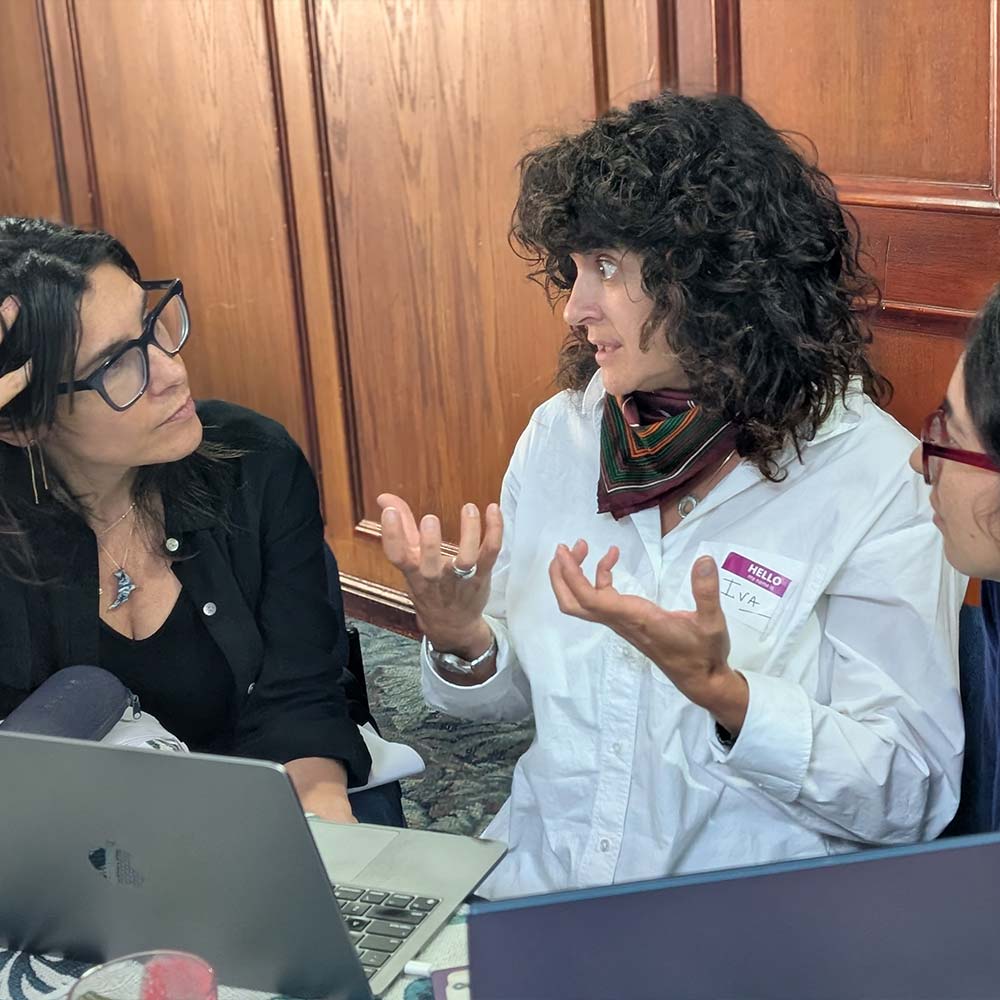

Tools and Training
We train and provide resources directly to grassroots advocates and frontline human rights and environmental defenders doing this work themselves, empowering communities to follow the money and advocate for their own rights effectively.
Read more about our tools and training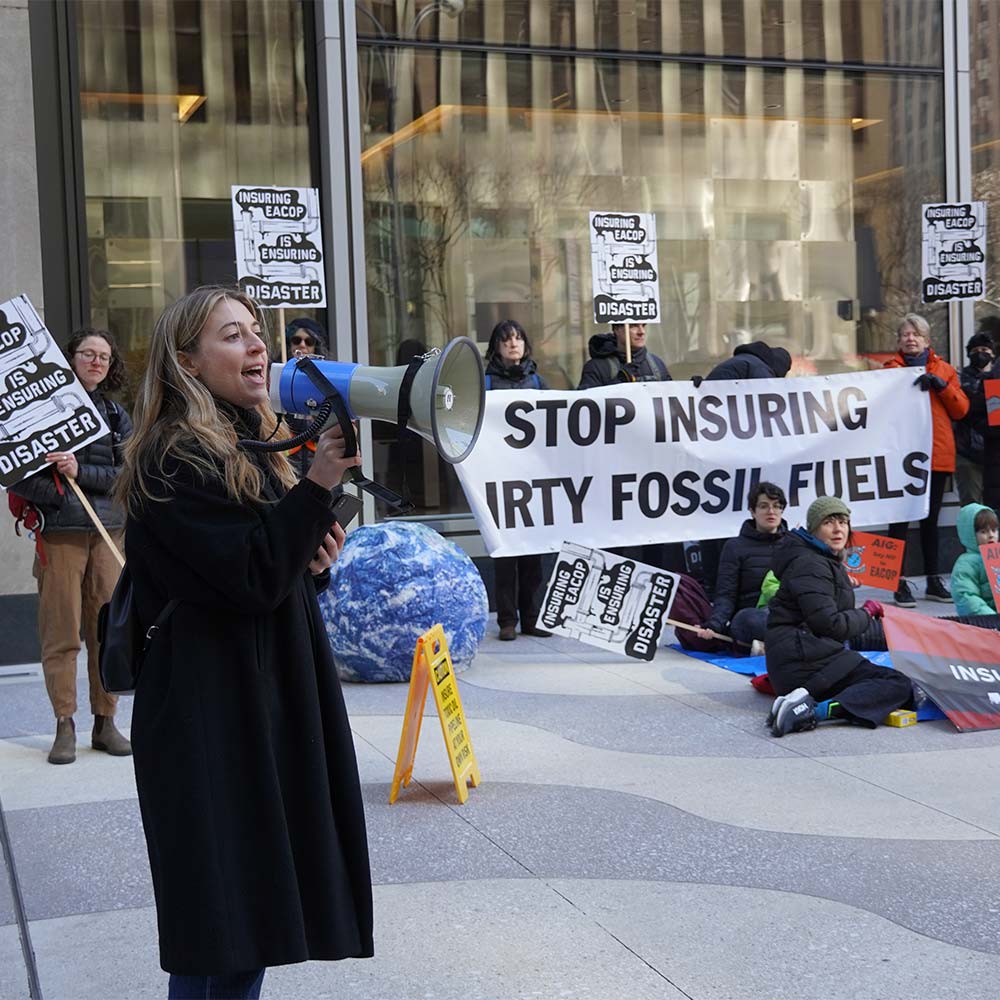
Policy Advocacy
We advocate for systemic reforms and policies to prevent corporate abuse and impunity, and to avoid harm to local communities and the environment in the first place, ensuring the global financial system respects human rights.
Read more about our policy advocacyYear in review
Follow the Money Training for Latin American Advocates
We delivered our Follow the Money training course for advocates from Latin America—our first in the region. We held a series of online and in-person workshops to share our FTM research and advocacy methods with a cohort of 20 advocates from Argentina, Brazil, Chile, Colombia, Ecuador, Mexico, Panama and Peru. These advocates are now using the skills and techniques they learned to help communities across the region, while also benefitting from strategic advice and support from our team.
Read more about our trainingESG Watch Launch
We launched a new website revealing how tens of billions of dollars in nominally ESG-focused investment is flowing to companies that are linked to serious social and environmental harm. ESG Watch provides a platform to amplify the voices of communities affected by harmful corporate activities, to publicize evidence of harm, and to hold financial services firms and investors accountable to their human rights responsibilities.
Visit the ESG Watch websiteWorld Bank Group Remedy Framework
Responding to decades of advocacy by project-affected communities and civil society organizations, including Inclusive Development International, the World Bank Group's private sector arms, the International Finance Corporation (IFC) and Multilateral Investment Guarantee Agency (MIGA), published their "Remedial Action Framework." This is the first policy statement from an international financial institution outlining how it will deliver remedy to communities harmed by the projects it finances. While we applauded the IFC and MIGA boards for taking this step, we also expressed concerns about its shortcomings, which risk diluting its effectiveness. We will be closely watching to see how robustly the framework is implemented in the cases we have helped communities bring to IFC's accountability mechanism, and advocating for those shortcomings to be addressed.
Relief for Indonesians Threatened by Dairi Mine
Residents of Dairi province, on the Indonesian island of Sumatra, celebrated when the Indonesian Ministry of Environment revoked a permit for the planned Dairi Prima Mineral zinc and lead mine. The revocation came in response to an earlier Supreme Court decision finding that the mine's planned tailings dam posed unacceptable dangers due to high seismic activity, landslide risk, and unstable terrain. Inclusive Development International is proud to have been supporting the Dairi communities for many years, as they gathered evidence and expert reports, advocated for their rights, and argued their case all the way to Indonesia's highest court.
Groundbreaking Settlement with Thai Sugar Giant
More than 700 farming families in Cambodia, who we have been supporting for over a decade, celebrated after reaching a settlement with Thai sugar giant Mitr Phol. The families were violently displaced from their land and homes in 2008-2009 to make way for an industrial sugar plantation owned by Mitr Phol. It took well over a decade of sustained advocacy, including bringing the first-ever transboundary class action litigation in a Southeast Asian court. But with our support, alongside Equitable Cambodia and our Thai legal team, the families successfully negotiated a remedy they are satisfied with.
Complaint Accepted Against Standard Chartered
The UK National Contact Point for Responsible Business Conduct, a government body that monitors the operations of British multinational enterprises, accepted our complaint against Standard Chartered bank. The complaint, co-submitted with Filipino and European partners, focused on the bank's co-financing of the construction of four coal-fired power plants in the Philippines that have caused serious environmental, economic and health-related harms in surrounding communities.
Follow the Money Training for African Advocates
We delivered the first in-person workshop of our two-part Follow the Money training in Kenya for a cohort of African human rights and environmental advocates from across the continent. The four-day workshop consisted of our interactive research learning modules on how large projects are developed and funded, unraveling corporate structures, identifying lenders, uncovering shareholders, and researching supply chains.
Read more about our trainingsMediation Agreement Signed to Address CBG's Impacts on Water
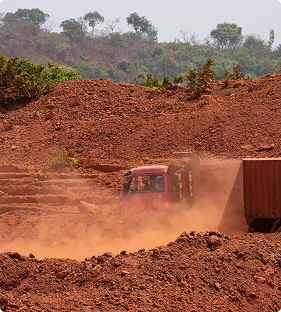
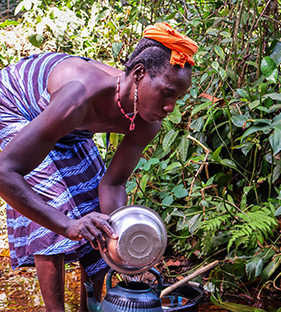
The ongoing mediation process that we are accompanying between 13 Guinean communities and the Rio Tinto-Alcoa owned Compagnie des Bauxites de Guinée (CBG) reached a new milestone when the parties signed an agreement formalizing CBG's commitments to provide critical water infrastructure and mitigate the impacts of mining on natural water sources, to fulfill the communities' water needs.
Proposal for a Rights-Based Alternative to Development-Forced Displacement, to Advance a Just Energy Transition
In October, during the World Bank Annual Meetings in Washington D.C., we put forward an innovative policy proposal for a new, rights-based approach to the participation of communities in decision-making about investment projects that impact their land and livelihoods. Adoption of this approach is urgently needed to ensure that projects being fast-tracked as part of the renewable energy transition do not come at the expense of Indigenous Peoples and other land-connected communities.
First Voices from the Frontlines Report
During the UN Forum on Business and Human Rights in Geneva, we launched the first in a series of case study publications entitled Frontline Voices in the Fight for a Just Energy Transition, which spotlights key pipeline transition mineral projects around the world and provide a platform for the communities at-risk to advocate for their rights and a seat at the table in shaping these projects. Our first publication, I'll Do Anything to Stay Here, focuses on the expansion of the CBG bauxite mine in Guinea.
Year in review
Follow the Money Training for Latin American Advocates
We delivered our Follow the Money training course for advocates from Latin America—our first in the region. We held a series of online and in-person workshops to share our FTM research and advocacy methods with a cohort of 20 advocates from Argentina, Brazil, Chile, Colombia, Ecuador, Mexico, Panama and Peru. These advocates are now using the skills and techniques they learned to help communities across the region, while also benefitting from strategic advice and support from our team. Read more.
ESG Watch Launch
We launched a new website revealing how tens of billions of dollars in nominally ESG-focused investment is flowing to companies that are linked to serious social and environmental harm. ESG Watch provides a platform to amplify the voices of communities affected by harmful corporate activities, to publicize evidence of harm, and to hold financial services firms and investors accountable to their human rights responsibilities. Visit site.
World Bank Group Remedy Framework
Responding to decades of advocacy by project-affected communities and civil society organizations, the IFC and MIGA published their "Remedial Action Framework." This is the first policy statement from an international financial institution outlining how it will deliver remedy to communities harmed by the projects it finances. While we applauded the boards for taking this step, we also expressed concerns about its shortcomings, which risk diluting its effectiveness. We will be closely watching implementation in the cases we have helped communities bring to IFC's accountability mechanism.
Relief for Indonesians Threatened by Dairi Mine
Residents of Dairi province, on the Indonesian island of Sumatra, celebrated when the Indonesian Ministry of Environment revoked a permit for the planned Dairi Prima Mineral zinc and lead mine. The revocation came in response to an earlier Supreme Court decision finding that the mine's planned tailings dam posed unacceptable dangers due to high seismic activity, landslide risk, and unstable terrain. IDI is proud to have been supporting the Dairi communities for many years.
Groundbreaking Settlement with Thai Sugar Giant
More than 700 farming families in Cambodia, who we have been supporting for over a decade, reached a settlement with Thai sugar giant Mitr Phol. The families were violently displaced in 2008-2009. It took well over a decade of sustained advocacy, including bringing the first-ever transboundary class action litigation in a Southeast Asian court, but with our support, the families successfully negotiated a remedy they are satisfied with.
Complaint Accepted Against Standard Chartered
The UK National Contact Point for Responsible Business Conduct accepted our complaint against Standard Chartered bank. The complaint focused on the bank's co-financing of four coal-fired power plants in the Philippines that have caused serious environmental, economic and health-related harms in surrounding communities.
Follow the Money Training for African Advocates
We delivered the first in-person workshop of our two-part Follow the Money training in Kenya for a cohort of African human rights and environmental advocates from across the continent. The workshop covered interactive research modules on project development, corporate structures, identifying lenders, and supply chains. Read more.
Mediation Agreement in Guinea
The ongoing mediation process between 13 Guinean communities and CBG reached a new milestone when the parties signed an agreement formalizing CBG's commitments to provide critical water infrastructure and mitigate the impacts of mining on natural water sources. Read more.
Proposal for a Rights-Based Alternative
During the World Bank Annual Meetings, we put forward a policy proposal for a rights-based approach to community participation in decision-making about projects that impact land. This is urgently needed to ensure renewable energy transition projects do not come at the expense of communities.
First Voices from the Frontlines Report
At the UN Forum in Geneva, we launched the first in a case study series entitled Frontline Voices in the Fight for a Just Energy Transition. Our first publication, I'll Do Anything to Stay Here, focuses on the expansion of the CBG bauxite mine in Guinea.
Feature
Ending forced displacement to advance a just energy transition
To prevent further climate change and its disastrous implications for human rights and humanity, we must urgently halt the extraction and use of fossil fuels.
At the same time, the path to a clean energy future carries its own human rights risks—for example, mining and other large scale development projects being justified as essential to the energy transition are enormously land-intensive and are already driving displacement and environmental harm. Inclusive Development International is leveraging our deep experience working with communities affected by such projects to develop and advocate for rights-based and community-centered policy solutions.
Proposal for a new, rights-based approach to community participation in development projects
In October, we published a proposal for a new, rights-based approach to community participation in decision-making about investment projects that impact their land and lives—including energy transition projects. The proposal, “A Just Alternative to Development-Forced Displacement: Policy proposal to advance a just energy transition for project-affected communities,” was endorsed by more than sixty human rights, environmental justice and Indigenous Peoples’ organizations. It puts forward a framework for shifting policy and practice away from the prevailing paradigm that accepts forced displacement of communities “in the way of development,” towards a new approach to engaging project-affected people that is rooted in respect for their dignity, knowledge and capabilities to make their own development choices.
Since publishing the proposal, we have been advocating with key industry actors and standard-setters to realize this new approach through changes to development finance policies, industry standards and corporate practices.
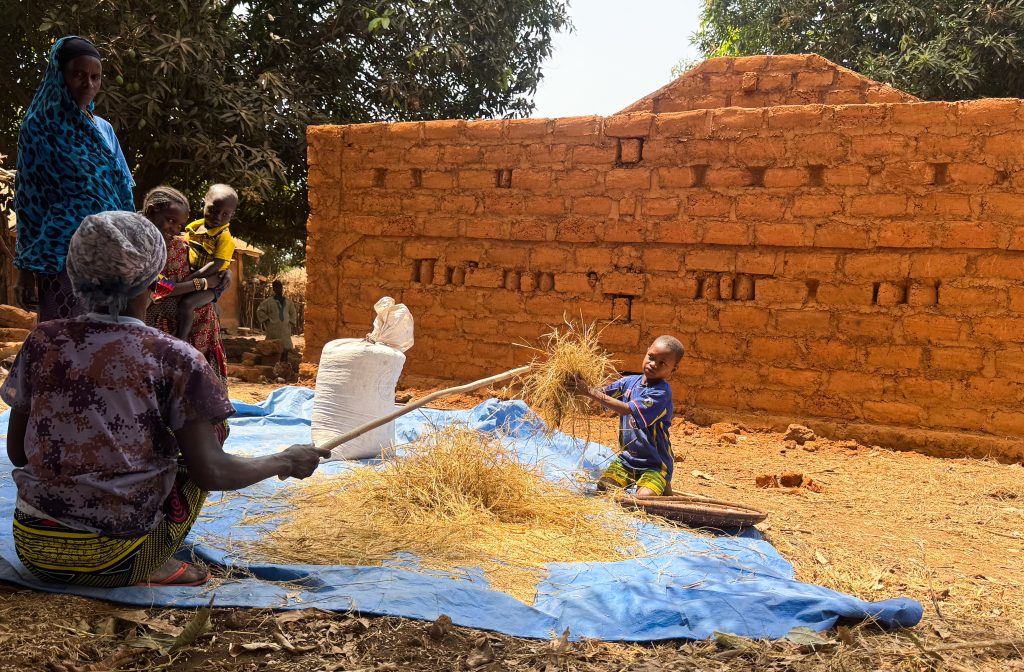
Supporting communities at risk from transition mineral mining
In addition to advocating for broader policy change to end development-forced displacement and secure the rights of project-affected communities, we are also working to amplify the voices of these communities in the policy conversation and support them to claim their rights.
In November, during the UN Forum on Business and Human Rights, we launched the first in a series of case study publications entitled Frontline Voices in the Fight for a Just Energy Transition, which will spotlight key pipeline transition mineral projects around the world and provide a platform for the communities who are at risk to advocate for their rights and for a seat at the table in shaping these projects.
Our first publication, I’ll Do Anything to Stay Here, focuses on the expansion of the Rio Tinto-Alcoa owned CBG bauxite mine in Guinea. The report captures communities’ concerns and expectations for how CBG and its investors should engage with them to ensure that they benefit from any new mining on their land and that their livelihoods and resources are protected before decisions are locked in.
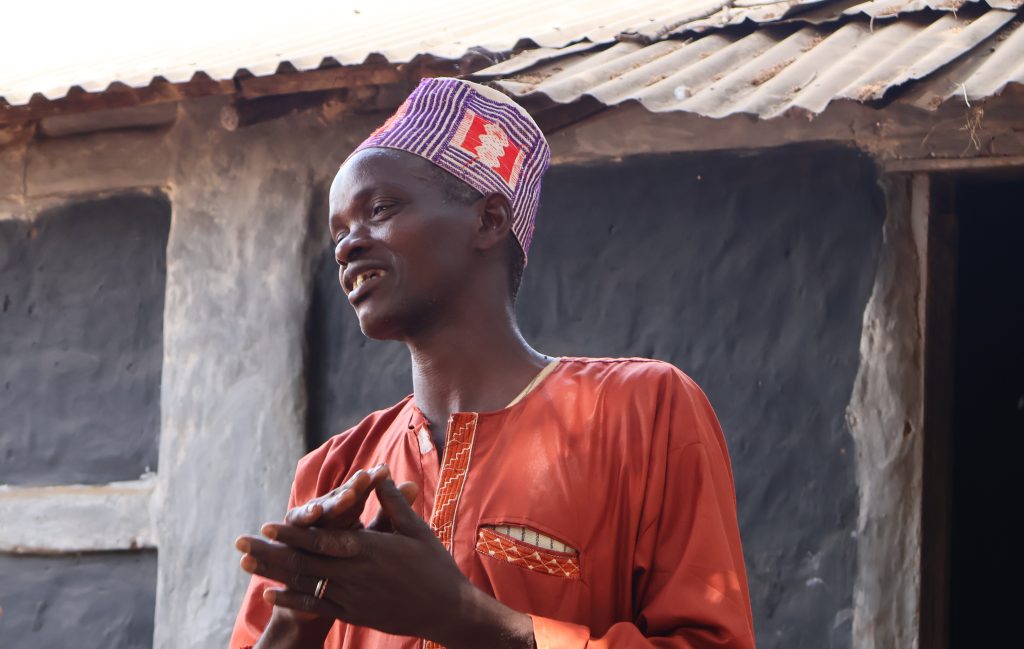
2025 Impact
Behind the Numbers
in redress or benefits for communities
Measurable outcomes for real people
Our team’s unyielding pursuit of justice alongside the Cambodian families displaced by Mitr Phol Sugar Corporation played an invaluable role in securing this past year’s groundbreaking settlement. We worked throughout the year to support community representatives and local partners to ensure a fair and equitable distribution of the settlement funds to the entire class of affected families.
We also continued to support the “Area One” community in Kintinian, Guinea, to lay the groundwork for the first distribution of the Area One Sustainable Development Fund, which was secured through last year’s historic settlement with AngloGold Ashanti. We helped the families form a new community-based association and establish a governance framework for managing these funds responsibly and equitably, while also assisting them to begin designing the first community development projects to be financed by the Fund in early 2026.
The water agreement signed with CBG this year resulted in the construction of 32 new deep water wells and the rehabilitation of 11 existing wells, the construction of 10 new boreholes and the installation of 16 solar panels to power the boreholes, and the construction of a new irrigation system, amongst other measures to improve access to clean water for household use in the communities affected by CBG’s mining operation.
In October 2025, the International Finance Corporation approved a $12 million program aimed at strengthening support services for survivors and prevention of gender-based violence throughout Kenya. The program was developed in response to the investigation of child sexual abuse perpetrated at Bridge International Academies, a chain of for-profit schools that was financed by IFC. Since 2023, Inclusive Development International has worked to expose and hold the IFC accountable for these abuses and support the Bridge survivors in their struggle for redress.
communities accompanied with advocacy and legal support
Accompanying communities in long-term pursuit of justice
In 2025, we continued our in-depth accompaniment of communities in 11 cases around the world in their unrelenting pursuit of justice. This included ongoing research, advocacy and accompaniment in complaints processes for communities in Guinea, Liberia and Indonesia to prevent and secure remedy for the impacts of mining on their land. It included ongoing partnerships with community advocates in East Africa, Indonesia and the Philippines who are working to stop new fossil fuel projects and to secure remedy for the devastating impacts of past and current coal and other fossil fuel development. And it included our work with the hundreds of Cambodian families who in May 2025 reached a financial settlement with Mitr Phol Sugar Corporation. Read more about our casework.
institutions with stronger human rights policies or practice as a result of our advocacy
Securing meaningful systems-change
In addition to the adoption of the International Finance Corporation (IFC) and Multilateral Investment Guarantee Agency (MIGA) Remedial Action Framework, we also successfully advocated for changes in policy and practice within multistakeholder sustainability initiatives, which strengthened their human rights due diligence procedures and expectations for members. Additionally, in response to our advocacy with partners, German automakers and energy companies initiated new partnerships with downstream suppliers in Guinea to prevent and remedy environmental and social harms within their aluminum supply chains.
advocates trained, including 49 graduates of our full 6-month Follow the Money to Justice training program, who have joined our global community of practice
IDI Research Associate Alexla Pérez-Sánchez reflects on her experience helping lead our training for Latin American advocates
“I watched each person grow in confidence, show up with hard work and determination, and build real connections with one another. The peer-led sessions added a rich layer of learning, and it was clear that everyone—especially those newer to the work—walked away with a deeper understanding and fresh perspectives. I’m looking forward to seeing how this group grows and stays connected. Engaging with them has truly been a privilege.”
harmful projects investigated by Inclusive Development International and the global Follow the Money community of practice
Featured Investigation: Ramping up media and financial sector advocacy to stop harmful steel and coal plant development
Land acquisition and initial development work for the proposed JSW Utkal steel plant and coal power station in India has already violated rural, forest communities’ and Indigenous People’s rights and caused serious environmental harms. If the project moves forward, there would be further negative impacts on public health and local livelihoods, as well as threats to critical biodiversity and endangered species.
In 2023, the Anti-Jindal-Anti-POSCO Movement (Jindal-POSCO Pratirodh Sangram Samiti – JPPSS), a grassroots movement of affected people working to stop the project, came to us for help identifying new avenues for advocacy and opportunities to bring international attention to the project. Our investment chain research revealed a range of shareholders who community advocates were able to engage, as well as human rights grievance mechanisms connected to commercial banks with financing relationships to the project developer.
We connected the movement to our partner BankTrack, which worked with them to submit complaints to some of those mechanisms and leverage the opportunity to garner coverage in industry journals and other publications, helping achieve their goal of gaining the attention of international audiences. The complaints and international attention have already resulted in more productive engagement from the banks, and our latest inquiries indicate the project has not yet reached financial close. The movement also received significant international recognition at the 2025 UN Responsible Business and Human Rights Forum—Asia-Pacific, where it was spotlighted as an important development in regional responsible business and governance discussions.
Explore all of our investigations using the interactive map on our investigations page.
new advocacy opportunities identified by IDI and the FTM community or practice
Featured Advocacy Opportunity: Cleantech Lithium listing on Australian Stock Exchange unsecured after FTM research and advocacy
CleanTech Lithium markets itself as offering an environmentally and socially sustainable approach to exploiting Chile’s vast lithium reserves. The company touts its agreements with Indigenous communities as proof of its social license to operate, but according to local and Indigenous leaders, these agreements do not adhere to Free, Prior and Informed Consent requirements under Chilean law, and have excluded communities that oppose the projects due to their potential negative impacts on water access and other environmental and social risks.
As part of research we undertook at the request of Earthworks and leaders from the Indigenous Community of Comuna de Copiapó in Chile, we discovered that CleanTech was in the process of applying to be listed on the Australian Stock Exchange (ASX), so we urged the groups to reach out to ASX. Together, they submitted a letter to the stock exchange, flagging their concerns about the company’s failure to disclose key environmental, social, and regulatory risks associated with its lithium projects, including evidence of violations of Indigenous rights. The letter requested that the ASX and Australian Securities and Investments Commission reject the company’s listing application until and unless they could ensure CleanTech’s full disclosure of risks and compliance with regulations. Our latest inquiries suggest the listing is still on hold.
Support our work
Make a donation
We are a nimble organization that operates with very minimal overhead costs. The donations we receive go a long way toward increasing our capacity to serve more communities & realize more lasting change to advance a just and inclusive global economy.
To donate by mail, please send a check to: Inclusive Development International 82 Patton Avenue Suite 210, Asheville, NC 28801 USA
Your gift is tax deductible in the United States. Inclusive Development International is a section 501(c)(3) nonprofit organization. Our tax identification number (EIN) is: 82-2413310.
If you have questions about your donation: Please call: +1 (828) 505-4340 or, Email info@inclusivedevelopment.net.