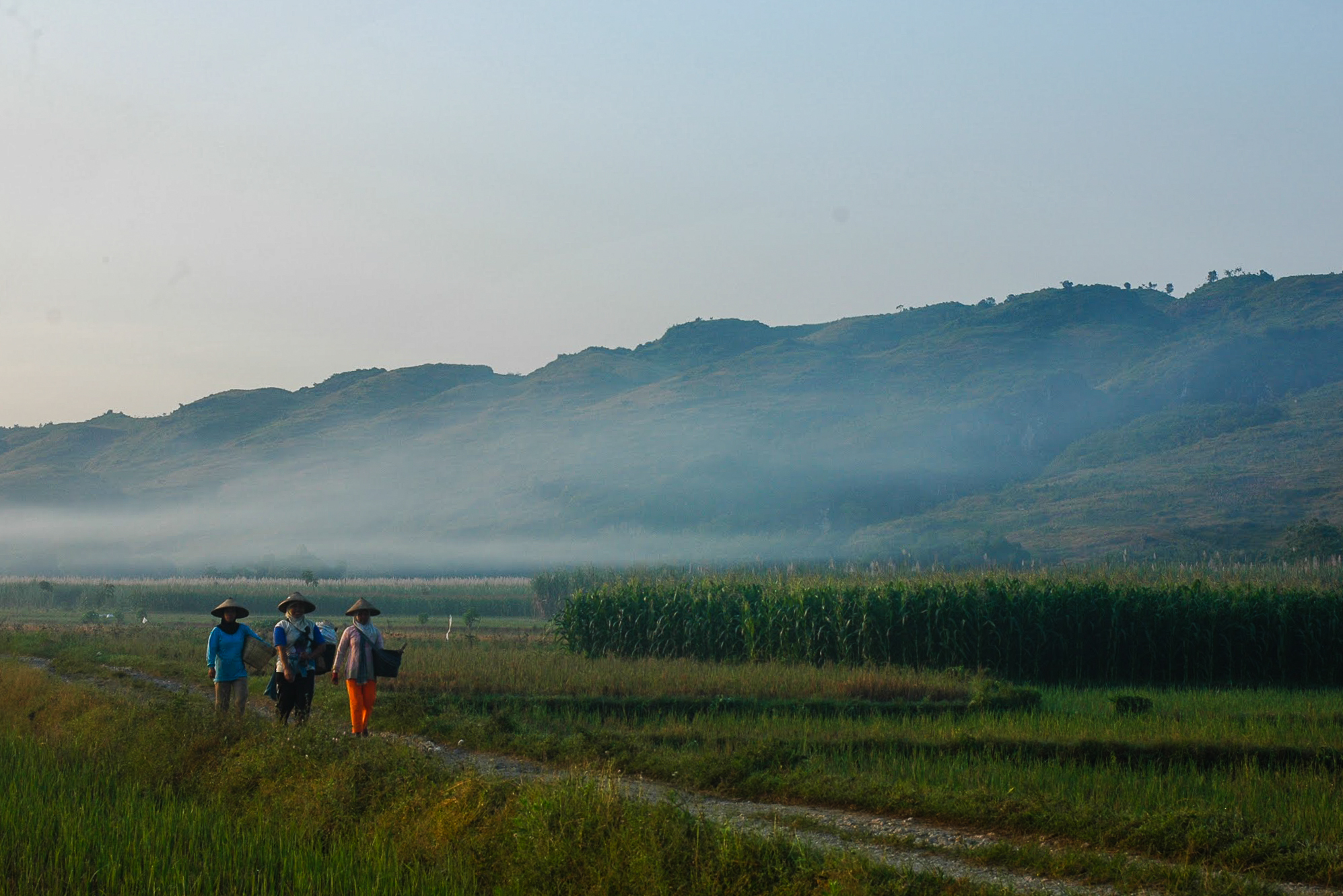
Photo by the Kendeng Peoples’ Movement.
Yesterday, Inclusive Development International supported ten affected individuals, alongside the non-governmental organizations FIAN, Misereor and Watch Indonesia, to file a complaint under the German Supply Chain Act against Heidelberg Materials over its plans to build a limestone mine and cement factory in the middle of the Kendeng Mountains of Central Java. The complaint was submitted to Germany’s Federal Office for Economic Affairs and Export Control (BAFA) ahead of Heidelberg Material’s annual general meeting today. It alleges that the company violated its corporate due diligence obligations under the Act by failing to properly assess or develop plans to mitigate serious environmental and human rights risks posed by the project to affected communities, including the Samin people, who self-identify as an Indigenous.
“If the project is implemented, we face an ecological catastrophe, impoverishment, and violations of our human rights,” said Bambang Sutikyo, one of the complainants who lives in the affected region.
The complaint cites several scientific studies and a 2017 study commissioned by the Indonesian presidential office that point to the significant risks of mining in the region, which is characterized by a complex and fragile underground aquifer system that has long sustained local people and agriculture, and that is of vital spiritual significance to the Samin. It also acts as a natural carbon sink. Implementation of the cement project plans would irrevocably impair water availability and soil quality, threatening to cause serious consequences for the livelihoods, food security, and health of between 35,000 and 200,000 people, including Indigenous people and farmers, in the Kendeng region. “We are losing our livelihoods, such as our land and agriculture, which allow us to feed our families, meet our daily food needs, and pay for our children’s schooling,” complainant Bambang Sutikyo continued.
Heidelberg Materials AG, one of the world’s largest building materials companies, has been aware of the human rights risks for years, yet is sticking to its plans. “The Supply Chain Act obliges Heidelberg Materials to comprehensively investigate the risks and prevent negative impacts. This is only possible by halting the project,” explains Insa Heinke of FIAN. “We expect the Federal Office for Economic Affairs and Export Control (BAFA) to order appropriate measures and, if necessary, impose fines to enforce them.”
“If Heidelberg Materials wants to position itself as a responsible business leader that follows the law, it cannot move forward with a project that poses such severe risks to the Samin People, including their vital water sources and sacred sites, without their agreement,” said Natalie Bugalski, Senior Legal and Policy Director at Inclusive Development International. “They have never meaningfully engaged with affected communities about whether this project should proceed, which is why we brought this legal action today.”