The International Finance Corporation (IFC) is in the process of updating its Sustainability Framework, including its Performance Standards on Environmental and Social Sustainability, a set of requirements for how IFC clients should avoid, mitigate and manage environmental and social risk in their projects.
The IFC Performance Standards are a critical instrument for mainstreaming better policies and practices across the private sector. They apply not only to projects funded through IFC’s own multi-billion dollar annual budget, but they also set a global bar for other lending institutions and corporations—many of which have committed to upholding the Performance Standards in their own work. These include numerous multi-and bi-lateral development finance institutions, the 100+ private banks that are signatories to the Equator Principles, as well as 32 export credit agencies.
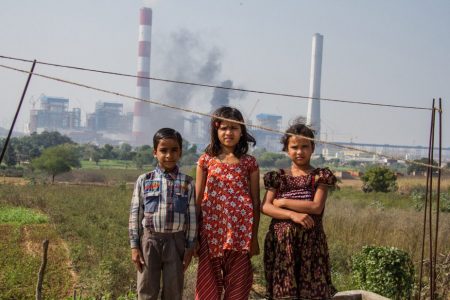
The current review offers a key opportunity to correct deficiencies in the current Performance Standards that are contributing to human rights abuses and environmental harms on a wide scale.
Our civil society partner Re-Course is coordinating an informal network of civil society and aligned organizations to engage the IFC during the Sustainability Framework review. You can find more information about those efforts, the IFC’s timeline and opportunities to engage here.
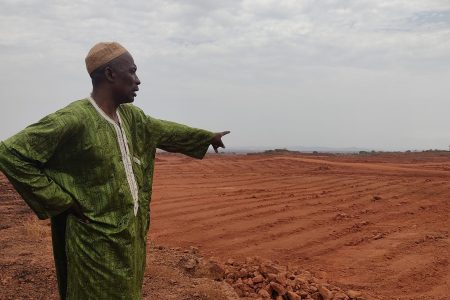
In early 2026, Inclusive Development International led the drafting of a joint submission endorsed by more than 30 civil society organizations, which addresses flaws and gaps in IFC’s current Performance Standards relating to land acquisition for development projects. Strengthening these standards is especially urgent in the current race for transition minerals, where mining projects frequently threaten the land rights and human rights of local communities.
The submission critiques the IFC’s current approach, which allows for large-scale resettlement of communities to make way for development projects in many cases. We emphasize that such resettlement, even with livelihood restoration efforts, has proven extraordinarily difficult to carry out in a manner that upholds human rights. The costs borne by affected people—including food insecurity, psychological trauma, increased morbidity and vulnerability, especially among women and children, the erosion of social fabrics, and, for Indigenous Peoples, the endangerment of cultural survival—are unacceptably high, and it is fundamentally inconsistent with the World Bank Group’s mission and goal of sustainable development to impose these costs on vulnerable communities.
The submission outlines recommendations to reform Performance Standard 5: Land Acquisition and Involuntary Resettlement (PS5), as well as related aspects of PS 1 (Assessment and Management of E&S Risks and Impacts), and PS 7 (Indigenous Peoples and the Sustainability Policy). It draws from the principles outlined in our policy proposal for a new, rights-based approach to community participation in decision-making about investment projects that impact their land and lives and our experience working with communities in our cases over the years.
Key recommendations include:
In May of 2026, we submitted additional comments to the IFC Sustainability Framework Review Team delving deeper into our recommendations for strengthening the IFC’s approach to ensuring community support for high-risk projects.
In our submission, we urge the IFC to update the Performance Standards to include a new requirement for clients to secure and maintain Broad Community Support for projects, and we highlight extensive evidence showing that projects that fail to secure community support often face costly delays, conflict, litigation, reputational damage, and, in some cases, violence. Indeed, research across the mining, infrastructure, agribusiness, and other sectors demonstrates that meaningful engagement with affected communities is not only a human rights imperative but also a sound business strategy. In short: up-front investment in communities saves money and would help ensure IFC projects meet their development objectives.
We again point to our policy proposal for a new, rights-based approach to community participation in decision-making about investment projects that impact their land and lives, and its six core principles for engaging project-affected people, as a roadmap for structuring the new standards, which must go well beyond the IFC’s current consultation requirements, which have not proven effective.
Our submission also calls on the IFC to ensure that the Broad Community Support requirement is met before financing is approved and disbursed (i.e., when IFC leverage is highest) and to take steps to ensure that Broad Community Support is maintained throughout the project lifecycle.
Everyone loses when development projects create social conflict, and there is already broad agreement that up-front investment in communities is the best and most cost-effective solution. It is time for the IFC Performance Standards to reflect that reality.