

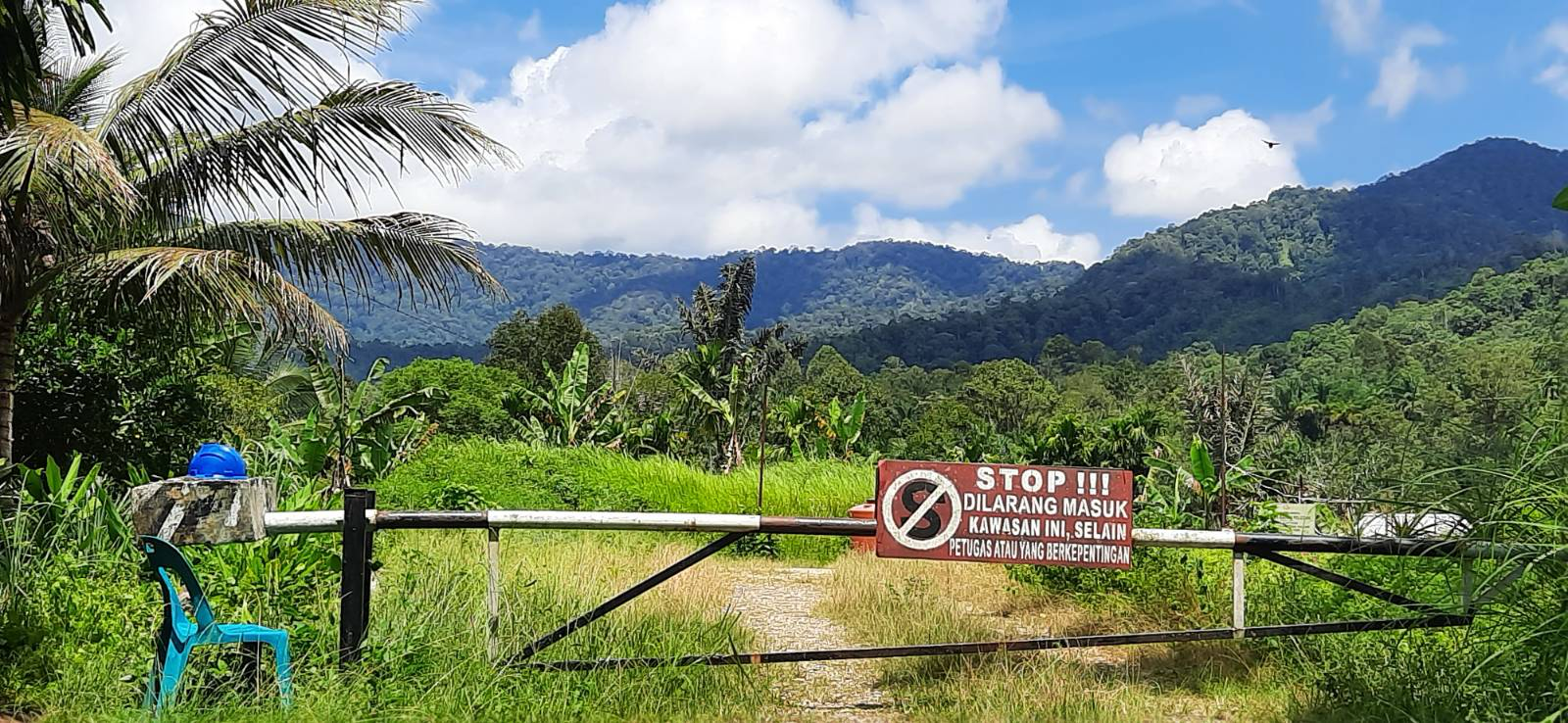
Communities in the Dairi Regency of North Sumatra, Indonesia have filed a lawsuit with the Jakarta State Administrative Court, challenging the approval of a new environmental permit for the Dairi Prima Mineral zinc and lead mine.
The lawsuit challenges the Ministry of Environment’s decision to approve a new environmental permit for the Chinese-owned mine after Indonesia’s Supreme Court ordered the government to revoke approval for the same project in 2024.
The permit for the mine was initially revoked due to concerns over the potential for the mine’s tailings dam to collapse, which could unleash more than 1 million tons of mud and toxic waste on surrounding communities. The threat of collapse has been verified by independent geotechnical experts due to its location in one of Indonesia’s most earthquake-prone regions. An expert report on the project’s risks concluded in 2020 that seismic activity, combined with the area’s heavy annual rainfall, would lead to the collapse of a tailings dam at the site “within a few decades” of the mine’s closure, sending “a wave of liquid mud downstream to the north.” Tailings dam collapses in other areas of the world—even without such high earthquake risk—have destroyed villages, killed hundreds of people, and poisoned the environment for generations. More than 11,000 people, most of them Indigenous, live in villages near or downstream from the proposed Dairi mine.
The Ministry of Environment re-approved the mine after Dairi Prima Mineral drew up new plans, which replaced the planned tailings dam with a plan to backfill 100% of the tailings the mine produces–something many experts say is impossible.
Prof. David Williams, Emeritus Professor of Geotechnical Engineering and Specialist Consultant in Tailings and Mine Waste Management and Mine Closure from The University of Queensland, Australia, stated that it’s likely DPM would only be able to backfill a maximum of 50% of the tailings, adding, “If DPM were allowed to start, a large tailings dam would be inevitable, and in Dairi, the consequences and likelihood of a collapse would be extreme.”
Inclusive Development International has been working with Dairi communities to stop the mine and hold Dairi Prima Mineral accountable since 2019, alongside our Indonesian partners. The case is not only critical for communities whose land and health are most immediately at risk, but it is also an important litmus test for whether the Indonesian government is committed to holding mining companies accountable for their environmental and human rights impacts, especially as Indonesia is positioning itself as a global climate leader.
Inclusive Development International’s senior legal and policy director Natalie Bugalski stated, “The Indonesian government’s re-approval of a mine that poses such grave risks for surrounding communities, including Indigenous People who oppose the mine, is deeply disheartening. As the race for minerals to be used in the energy transition intensifies, it is imperative that we do not trample on the rights of communities who have been living on resource-rich land to extract as much as possible, as quickly as possible, with no regard to the risks to human life and security involved.”
While there have been previous cases in Indonesia where mining companies have sought ways around court decisions, the Dairi case represents a significant escalation. For the first time, communities say a final and binding Supreme Court ruling has been followed by a new approval from the Ministry of Environment that does not address the underlying spatial planning issues at the heart of the Court’s decision. The dispute therefore goes beyond one mining project—it raises fundamental questions about the balance of power between Indonesia’s judiciary, which is responsible for upholding the law, and the government ministries responsible for implementing environmental policy. In addition to the future of the mine being at stake, the strength of legal protections and democratic accountability in Indonesia’s rapidly expanding mining sector is too. The lawsuit is a test of whether judicial decisions can effectively constrain government action and whether Indonesia’s environmental laws can be enforced when major mining interests are involved.
Despite the setback, communities are nowhere near giving up. Ms. Rainim Purba from Pandiangan Village, said “we will fight this. DPM again proposed a mine that will kill us. I and others, however, know what DPM is up to. We will fight this mine until we die.”
Inclusive Development International is proud to have long supported these communities who have been tenaciously defending their land and lives against what is truly an irresponsible project.