CASE FILE | |
| Location: | Indonesia – Kendeng Mountains, Central Java |
| Project | Cement Limestone Mine and Cement Factory |
| Companies: | PT Sahabat Mulia Sakthi / Indocement, a controlled entity of Heidelberg Materials |
| What’s at stake:
| · Lives and livelihoods of local communities · Subterranean river system supplying water for drinking and agriculture · Ancestorial territory of the Indigenous Samin people · Protected animal species |
| Community goals: | Stop the project |
| Key investors and financiers: | Aberdeen Asset Management (UK), APG (Netherlands), Bank of America (US), BNP Paribus (France), BlackRock (US), Capital Group (US), Citibank (US), Deutsche Bank (Germany), ING (Netherlands), Ludwig Merckle (Germany), PGGM (Netherlands), Norwegian Government Sovereign Wealth Fund (Norway), Raiffeisen Bank International (Austria), Standard Chartered (UK), Steve Schwartzman (US), TIAA/Nuveen (US), Vanguard (US) |
| Our partners: | Kendeng peoples’ movement (JMPPK), FIAN Germany, Heinrich-Böll-Stiftung |
For the Indigenous Samin people, the subterranean river system that flows beneath the mountains is of vital spiritual significance, but it also supplies water to the local villages for drinking and agriculture. A huge limestone mine and factory proposed by Indocement—owned by German company Heidelberg Materials—would jeopardize all of this and threaten a range of protected animal species.
Fortunately, the people of the Kendeng area are no strangers to bravely standing up to powerful interests to ensure they have a say about their own future and the way their communities do things. They are famed for having devised creative ways to resist Dutch colonial rule and managing to carve out a unique place for their communities in modern Indonesia.
For years, their determined grassroots activism has held off the mine and kept at bay the corporate giants seeking to extract the area’s wealth. Now the communities are calling out to organizations and solidarity movements around the world to help cut the flow of international financing to this destructive project.
Inclusive Development International and partners have assisted communities to engage with Heidelberg Materials shareholders and to lodge numerous complaints against the company, including a 2026 complaint filed under the German Supply Chain Act, and earlier complaints filed with Germany’s National Contact Point for Responsible Business Conduct (NCP) and the International Finance Corporation (given its indirect financing of the project). These complaints highlighted how the project jeopardizes access to vital water resources for at least 35,000 people in the surrounding Sukolilo, Kayen and Tambakromo districts and will threaten sites sacred to the Indigenous Samin communities. The NCP complaint led to a years-long process, including an attempt at mediation that unfortunately failed due to the company’s insistence on excessive confidentiality requirements. In its final statement, the NCP recommended that the company disclose its environmental impact assessment to the communities, reenforcing one of the complainants’ key requests. Community pressure on Heidelberg Materials has continued to grow in both Indonesia and Germany with public protests targeting the company’s Annual General Meetings and Indonesian advocates challenging the legality of its operating license in Indonesian courts.
Subscribe to our mailing list to stay up to date with this and other cases.
“Every person needs a safe place to live and enough food to eat. We ask the company to stop its plan to destroy our environment and livelihoods in the name of development.”
– Kendeng community representative (name withheld due to fear of reprisals)
In June 2020, Inclusive Development International helped community representatives to file a formal complaint against the International Finance Corporation–the private-sector arm of the World Bank– for its indirect financing of the potentially devastating project through its equity investment in Heidelberg Materials financier Raifeissen Bank. The complaint, submitted to the IFC’s Compliance Advisor Ombudsman, emphasized that communities had not given their consent for the mine and factory, in breach of IFC’s Performance Standard 7 on Indigenous Peoples. This complaint was not admitted because IFC had divested its stake in Raifeissen Bank just before the complaint was filed.
In September 2020, we supported community representatives to file another complaint against the company to the German government’s National Contact Point for Responsible Business Conduct.
As a member of the Organization for Economic Cooperation and Development (OECD), Germany maintains an office that accepts and responds to complaints against German companies for breaches of the OECD Guidelines on Multinational Enterprises. The guidelines contain standards on human rights and the environment, which the complaint argues have been violated by HeidelbergMaterial’s’ controlled subsidiary PT Indocement.
The complaint alleged that Heidelberg Materials’ plans in the Kendeng mountains would wreak havoc on local water resources and threaten the livelihoods of thousands of families. It argued that PT Indocement has violated the Samin people’s right to self-determination by proceeding with a project on their territory that has not obtained their free, prior, informed consent. Key issues raised in the complaint included the company’s lack of disclosure surrounding the potential environmental and social impacts of the project and the quality of the impact assessment itself. A redacted version of the complaint is available here.
The NCP determined that the issues raised in the complaint merited further examination and proceeded to facilitate a nearly four-year process, including an attempt at mediation between the company and complainants that ultimately failed to progress due to the company’s insistence on excessive confidentiality requirements.
The NCP’s final statement responding to the complaint, published in October 2024, recommends that Heidelberg Materials provide the affected communities with its environmental and social impact assessment, in accordance with the OECD Guidelines.
In May 2026, we supported ten individuals who stand to be impacted by the project to file a complaint against Heidelberg Materials under the German Supply Chain Act, which came into force in 2023 and obliges Heidelberg Materials to investigate human rights and environmental risks and prevent negative impacts along its supply chain. The complaint is currently under review.
Inclusive Development International and our partners have also supported the community representatives in pursuing other, complementary channels for advocacy. Over the years, we have engaged directly with the company and its top shareholders, including US-based investment firms BlackRock, Vanguard and First Eagle; Société Générale of France; and Norges Bank Investment Management, the asset manager of Norway’s sovereign wealth fund. We continue calling on all of these actors to fulfill their responsibilities under the UN Guiding Principles on Business and Human Rights to respect the rights of local and Indigenous communities who have demanded the cancellation of this harmful project.
The Samin are self-identified Indigenous peoples whose ancestral territory is located in and around the prospective mine and factory site. The Samin peoples are culturally distinct from mainstream Javanese and Indonesian ethnicities and societies, having maintained their own traditional linguistic dialects, education institutions and socio-political structures. The Samin people believe that the mine will have inter-generational impacts if it is allowed to destroy their customary land.
The habitat of the Kendeng Mountains is of sacred value to the Samin. Their spiritual connection to the land and traditional practices of cultivating the land is an integral part of the Samin identity – which is known for the wisdom of its proverbs, its history of resisting Dutch colonial rule and cultural assimilation, and a strong commitment to maintaining an equilibrium with the natural world.
Despite the devastating impact on Indigenous land and natural resources, the project developers have failed to facilitate a process of consultation with the aim of securing the community’s free, prior and informed consent.
The irreparable environmental and social impacts of the proposed mine and factory have been well documented, including in a 2017 Indonesian government-led assessment, which recommended the protection of the area from mining. Despite this, local officials granted an operational license to PT Sahabat Mulia Sakthi (PT SMS), a subsidiary of the country’s second-largest cement company, PT Indocement, ultimately owned by the German multinational, Heidelberg Materials.
Heidelberg Materials is backed by some of the world’s largest asset management firms, pension funds and banks, including Austrian Raiffeisen Bank International, which is a client of the International Finance Corporation, a member of the World Bank Group. Its top shareholder is the German businessman Ludwig Merckle, who also has a blocking minority stake in the company.
Efforts to protect the mountain springs of Kendeng have been led by those most vulnerable to the effects of mining in the area – namely women and Indigenous activists. For over a decade, advocates have organized action in opposition to the project through the Kendeng peoples’ movement, JMPPK.
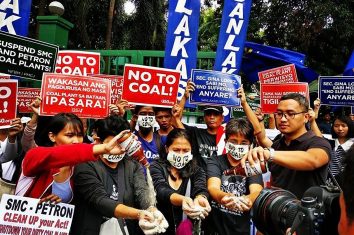
The group brought international attention to their cause in 2016, when activists cemented their feet in blocks outside of centers of governmental power in Jakarta. Similar protests have been held in following years at various locations such as outside the German Embassy in Jakarta and mimicked by solidarity groups in Germany outside Heidelberg Materials’ Annual General Meeting.
A 2017 special impact assessment by the Indonesian Presidential Office and Ministry of Environment and Forestry confirmed many of the communities’ fears. It stated that mining in Kendeng would cost local families their means of subsistence through the destruction of vital supplies of water for both farming and drinking. The same report detailed how mining in the area would have severe impacts on the local ecosystem, including destroying the habitats of rare species of plants and animals. The report states that mining in Kendeng could wipe out bat species that are important pollinators for local farmers.
Heidelberg Materials has been active in Indonesia since the early 2000s through the acquisition of subsidiaries, including PT Indocement, which is developing the Kendeng project. The local community campaign to stop the Kendeng mine and factory is gathering pace. It has successfully attracted support from various solidarity groups and environmental organizations in Germany and around the world. Inclusive Development International is honored to support their struggle to preserve their precious ecosystem and way of life.